
Industry News · Oct 16, 2026
Transformer Parts: Understanding the Main Components of an Oil-Immersed Transformer
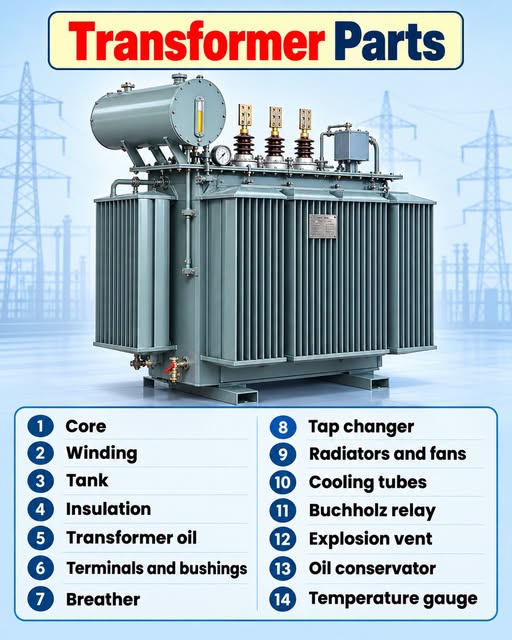
Understanding the main components of an oil-immersed transformer is essential for proper equipment selection, operation, maintenance, and troubleshooting. This guide introduces key transformer parts, including the core, windings, tank, insulation, transformer oil, bushings, tap changer, cooling system, Buchholz relay, conservator, and protection devices
Industry News
Transformer Parts: Understanding the Main Components of an Oil-Immersed Transformer An oil-immersed transformer is made up of multiple components that work together to transform voltage safely and efficiently. While the transformer may look like a single piece of equipment from the outside, each component has a specific function in the electrical, thermal, insulation, or protection system. Understanding these components can help engineers, EPC contractors, procurement teams, and end users better evaluate transformer specifications and maintenance requirements. 1. Transformer Core The transformer core provides the magnetic path required for transferring electrical energy between the windings. It is typically manufactured using electrical-grade silicon steel laminations. Proper core design and assembly are important for controlling no-load losses, excitation current, vibration, and noise. 2. Windings The windings are the electrical conductors that carry current and create the magnetic field required for voltage transformation. Depending on the transformer design and project requirements, windings may use copper or aluminum conductors. The winding design must meet requirements for electrical insulation, temperature rise, short-circuit withstand capability, and long-term mechanical stability. 3. Transformer Tank The transformer tank houses the core, windings, insulating oil, and other internal components. For outdoor applications, the tank also provides mechanical protection and helps maintain the required oil-tight environment. The tank structure and surface treatment are particularly important for transformers operating in humid, coastal, industrial, or other demanding environments. 4. Insulation System Insulation separates electrically energized components from each other and from the grounded transformer tank. Transformer insulation may include insulating paper, pressboard, oil, and other insulating materials. The overall insulation system is essential for maintaining dielectric strength and preventing electrical breakdown. 5. Transformer Oil In an oil-immersed transformer, transformer oil performs two important functions: - Electrical insulation - Heat transfer The oil transfers heat generated by the core and windings toward the tank walls, radiators, or other cooling equipment. Oil quality is therefore an important consideration during transformer commissioning, operation, and maintenance. 6. Terminals and Bushings Bushings provide insulated passages for electrical conductors to pass through the transformer tank. High-voltage and low-voltage bushings connect the transformer windings to the external electrical network while maintaining the necessary insulation between energized conductors and the grounded tank. 7. Breather For transformers equipped with a conservator system, a breather helps reduce moisture entering the transformer as the oil volume changes with temperature. A conventional silica-gel breather absorbs moisture from incoming air before it reaches the conservator. 8. Tap Changer A tap changer allows the transformer voltage ratio to be adjusted within a specified range. Depending on the transformer design, this may be an off-circuit tap changer or an on-load tap changer (OLTC). OLTC systems allow voltage adjustment while the transformer remains energized, making them particularly useful in applications where voltage regulation is important. 9. Radiators and Cooling Fans Transformers generate heat during operation, and an effective cooling system is essential for maintaining the required operating temperature. Radiators increase the heat-transfer surface area. For transformers using forced-air cooling, fans increase airflow across the radiators and improve heat dissipation. Typical cooling arrangements may include ONAN (Oil Natural Air Natural) and ONAF (Oil Natural Air Forced) configurations. 10. Cooling System The cooling system helps transfer heat from the transformer core and windings to the surrounding environment. Depending on transformer capacity and design, cooling may rely on natural oil circulation and natural air circulation, or additional forced-air equipment such as cooling fans. Proper thermal management helps maintain transformer efficiency and operating reliability. 11. Buchholz Relay A Buchholz relay is commonly used on conservator-type oil-immersed transformers. It can detect gas accumulation and abnormal oil movement associated with certain internal faults. As part of the transformer protection system, it can provide alarm or trip signals when abnormal conditions are detected. 12. Pressure Relief Device A pressure relief device is designed to release excessive pressure from the transformer tank when an abnormal internal event causes a rapid pressure increase. This helps protect the tank from excessive internal pressure. 13. Oil Conservator The conservator provides additional space for transformer oil to expand and contract as its temperature changes. It helps maintain the appropriate oil level in the main transformer tank during normal temperature variations. The conservator is commonly used together with a breather and other oil protection components. 14. Temperature Gauge Temperature indicators monitor the temperature of the transformer oil and, depending on the design, may also monitor winding temperature. Temperature monitoring provides important information for operators and can be connected to alarm or control systems. Why Understanding Transformer Components Matters When selecting an oil-immersed transformer, it is important to look beyond the rated capacity and voltage. Engineers and procurement teams should also consider: - Transformer core and winding materials - Insulation system - Transformer oil - Cooling method - Tap changer configuration - Bushings - Protection devices - Conservator and breather system - Temperature monitoring - Applicable standards and testing requirements The correct configuration depends on the transformer's rated capacity, voltage level, installation environment, load characteristics, grid requirements, and project specifications. Conclusion An oil-immersed transformer is a complete electrical and thermal system made up of many interconnected components. The core and windings perform the fundamental voltage transformation, while the oil and cooling system manage insulation and heat. Bushings provide external electrical connections, while devices such as Buchholz relays, pressure relief devices, and temperature indicators contribute to safe and reliable operation. Understanding these transformer parts can help customers make better decisions when selecting equipment for power distribution, industrial facilities, substations, and other electrical infrastructure projects. Every component matters. Reliable transformer performance starts with the right design, the right materials, and careful manufacturing.
Need product selection support, drawings review, or a BOQ quotation?
Submit RFQ